Category Archives: Books

Five Bells, by Gail Jones

Five Bells, by Gail Jones

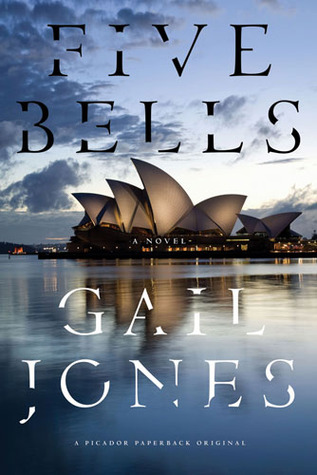
Five Bells, Gail Jones’s 2011 novel of four characters in one day in Sydney, first came to my attention through Jem Poster’s review for The Guardian, which made much of its similarities to Mrs Dalloway. My 2005 Authors in Context book on Virginia Woolf had included a chapter on the ways in which Woolf’s work is recontextualized by film adaptation and by the kinds of rewriting we find in Michael Cunningham’s The Hours and Robin Lippincott’s Mr Dalloway, so I was naturally interested to hear of another what might be another such work.  More recently I’ve been working on a reader’s guide to criticism of Mrs Dalloway, and thinking about what creative adaptations (principally The Hours) mean for our understanding of the original novel.  Critical articles that purport to be about both Mrs Dalloway and The Hours are often really only about the latter; they’re uninterested in how Cunningham’s adaptation might make us see the 1925 novel in a new light, or might simply remind us of its strengths.  (Seymour Chatman’s 2005 narratological comparison of the two is the most impressive exception to this rule.)
Jones Gail Five Bells

The novel concerns four characters on a January day in Sydney, all converging on the Circular Quay, from which the Sydney Opera House is visible. Two, Ellie and James, are Australian born (though James’s Italian ancestry is something he is particularly conscious of), and they were friends and lovers as teenagers. Now in their thirties (I think it’s set in 2010 or 2011), they have come to Circular Quay to meet again after many years; it slowly emerges that James, who for many years has been in poor mental health, has recently been involved in a tragic incident and wishes to tell Ellie about it.  The other two characters are Pei Xing, a Chinese-born woman who has settled in Australia, and Catherine, a young Irish woman who is there on holiday.  Each is preoccupied by memories: Pei Xing by her family’s persecution in the Chinese Cultural Revolution, and by her father’s work as a translator of Boris Pasternak’s Dr Zhivago; Catherine by  the death of her sparky, iconoclastic brother; James by a succession of traumatic incidents; Ellie, by less conspicuously painful memories of her teenage years.  In among these, several of them remember other bits and pieces, phrases from poems and novel and songs, so that when ‘No direction home’ turns up (p.174), you don’t doubt that ‘Like a Rolling Stone’ is being invoked.  (I can’t think of another novel that’s as relaxed as this one about popular song being part of the fabric of people’s emotional lives.)  Thematically, Five Bells is about the way we hold memories and that memories hold us; it’s about healthy and unhealthy relationships with the past; it’s about the value of re-engaging with the past, but also the value of detachment and disengagement.

On a first reading, prompted by Jem Poster’s comparison to Mrs Dalloway, it seems as if James is going to be an equivalent to Septimus Warren Smith, but this isn’t The Hours, and Jones isn’t attempting any straightforward mapping of Woolf’s characters on to her own.  Most importantly, there isn’t a Clarissa, no sane truth to set alongside James’s insane truth, no upper middle-class woman whose power contrasts with that of the lower middle-class male, no hostess of parties who might be seen (rightly or wrongly) as a redemptive figure. James is mentally unwell and taking medication, but his illness is nothing like as severe as Septimus’s.  Ellie is predisposed to happiness (I’m paraphrasing), but that attitude is significantly different from Clarissa’s more self-conscious and artificial celebratory trait.

Poster’s comparison is more relevant to what the characters (and Jones’s prose) register as they wander round central Sydney.  Five Bells is particularly good at noticing the urban soundscape:

[Ellie] was filled with corny delight and ordinary elation. Behind her, raddled train-noise reverberated up high, and the didgeridoo, now barely audible, continued its low soft moaning.  A child sounded a squeal. A ferry churned away.  From another came the clang of a falling gang-plank and the sound of passengers embarking (pp.3-4)

There’s an echo here of one of the passages early in Mrs Dalloway that defines Clarissa’s outlook:

In people’s eyes, in the swing, tramp, and trudge; in the bellow and the uproar; the carriages, motor cars, omnibuses, vans, sandwich men shuffling and swinging; brass bands; barrel organs; in the triumph and the jingle and the strange high singing of some aeroplane overhead was what she loved; life; London; this moment of June.

But it doesn’t feel like Jones is following Woolf slavishly; more that she’s selected the same palate, but modernised it and transposed it to contemporary Australia.  (The next thing we hear in the passage from Five Bells is ‘Jumping Jack Flash’.)

It’s modernised too in that eventually, but with an impressive inevitability, CCTV and contemporary surveillance culture comes into play.  Quite how Jones hints that this will be so, I’ve not determined, having read it only once, but halfway through I found myself wondering who or what was watching the four characters, and then, in the sixth and final chapter, there it was: a CCTV image capturing two of them.  It may be these expectations came from a recollection of Woolf’s plans for Mrs Dalloway, in which sketchy version Septimus would attempt assassinate the Prime Minister; that led me to wondering what James or another character might do, and how quickly they’d be spotted in a modern city centre.  Perhaps also a hazy recollection of Barbara Vine’s King Solomon’s Carpet, in which I think there might have been a terrorist. But it might simply come from the opening account of the four characters passing through a train station, talk of glimpses and ‘blurred partial vision’, and from Ellie’s reflections in chapter two about this being an age of mediation, and ‘relentless repetition’ of generic images of death and grief in newspapers and on TV. (It’s great though, that alongside those relatively conventional accounts of surveillance culture we can have Ellie’s recollection of her father’s word for old-fashioned aimless people-watching: lollygagging.)

What Five Bells illuminates about Mrs Dalloway is the way that Woolf’s novel relates the extraordinary to the everyday, the epoch-making to the quotidian.  Woolf’s account of Septimus’s insanity is intensely sympathetic, but Five Bells leads to the reflection that there’s something unfortunate about the way that Septimus’s illness has to be yoked to and derived from the Great War; the fact that the novel hints at other aetiologies (above all, Septimus’s sexuality) doesn’t diminish the problem.  Five Bells never really commits to an explanation of James’s illness. There is an early incident involving the slaughter of a chicken, which seems to have become a traumatic memory in the sense of a memory that can’t be assimilated into the main life narrative.  (The grammar describing it is tellingly ambiguous: ‘all of them caught in this drama with the headless chicken that would not do the right thing and straightaway, as it should, just lie down and die’ [p.61].  Is it the memory or the chicken that refuses to die?) But there are other factors for James — his family history, his mother’s own mental illness, the recent tragic incident — and the novel doesn’t want to place them in any kind of hierarchy.  In Catherine’s life, the epoch-changing event is the murder of the Irish journalist Veronica Guerin, but when we eventually learn about the cause of her brother’s death, it has no meaning on a worldwide scale.  (It’s interesting that we’re told Catherine adored U2 from an early age, as their songs so revel in the epic and the epoch-making, whether Bloody Sunday or Martin Luther King, but haven’t found much space for the everyday.  That preference, and the repeated references to Guerin, leave us expecting a more significant death for her brother.)  Its not that Five Bells doesn’t include the Significant Events of History — most obviously it does so in Pei XIng’s experience of the Cultural Revolution — but rather that it refuses to subordinate the everyday to those events.  By contrast, Mrs Dalloway‘s focus on the everyday is always overshadowed by the Great War: the aeroplanes refers back to it; the car backfiring refers back to the trenches and the assassination of the Archduke.  Recently, Elyse Graham and Pericles Lewis have questioned whether Woolf really believes in the sacrificial-redemptive logic that might seem to be implied by Septimus’s suicide and Clarissa’s response to it, and Five Bells also seems to distance itself from that aspect of Woolf’s novel.

A novel as deeply committed to the everyday as Five Bells necessarily has some trouble reaching a conclusion, and the solution that Jones has found in the final chapter involves a modulation into a slightly different style of narrative, a more dramatic one that we aren’t fully prepared for.  (I don’t want to say too much, for the sake of those who haven’t read it yet.)  There’s a kind of Thomas Hardy-like bitter irony about the conclusion, where trivial causes and a failure to communicate have terrible consequences.

Podcast: An Introduction to Orlando (1928), by Virginia Woolf

Podcast: An Introduction to Orlando (1928), by Virginia Woolf

I’ve uploaded an MP3 of an introductory lecture on Virginia Woolf’s Orlando. I was invited to give the lecture by the producer of a theatrical adaptation of it at Keble College; as the audience was reckoned to consist mostly of school pupils (presumably sixth-form), the lecture tries not to assume much familiarity with Woolf or the novel.  I begin with biographical background about Virginia and Vita, go on to narrate their relationship, and mention Logan Pearsall Smith as background to Nick Greene / Sir Nicholas Greene;  I then talk about genre (biography and fantasy), discover I’ve left far too little time to talk about sexuality, and conclude by addressing Angela Carter’s accusation that it’s ‘an orgy of snobbery’, caught up in the ideological myth of the English country house.

I hadn’t had an opportunity to see the play — and sadly, due to other commitments, wasn’t able to — so it doesn’t discuss that at all.

It’s all largely improvised, and two-thirds through when I’m discussing Sally Potter’s film adaptation, I completely forget Tilda Swinton’s name.

Podcast: Science and Poetry in the 1920s and 1930s

Podcast: Science and Poetry in the 1920s and 1930s

The audio file of my seminar paper on science and poetry is now available on SoundCloud; I hope in due course to have it uploaded to iTunesU, at which point I might delete the SoundCloud version.

Will Abberley kindly made a video, so if you’d like hear the same thing but with additional hand gestures and a few powerpoint slides, here it is.

As in the first half I do a close reading of a poem, Michael Roberts’s ‘Schneider Cup’, I’ve reproduced the text here.

SCHNEIDER CUP

Love of ruins: Detroit and Ohio

When I first saw photos from The Ruins of Detroit (2010),  by Yves Marchand and Romain Meffre, I was amazed and shocked. How can such magnificent buildings and the entire social structure that sustained them and depended on them collapse into ruin in such a short space of time?  They seem to be photos mesmerised by the volatility of capitalism, its ability to build up cities in a short space of time and the abandon them to the elements just as quickly.  Their mesmerisation by the spectacle of decay means they don’t, as photos, allow much space for human activity, or human despair or optimism, though I imagine that there’s a great deal of those things, and more, going on just beyond the frame.

Today The Guardian has a brief photo feature concerning ruined houses in Ohio, which I guess will be a glossy magazine feature on Saturday. These are a different kind of building from the Detroit ones — domestic spaces rather than public ones — but as images they’re very similar.  And that’s where it becomes a bit troubling: it feels as if a distinct genre has emerged, and the genre is becoming codified in terms of choice of subjects and the kind of lighting that is appropriate. Moreover, judging by the captions to the Ohio photos, its codified in terms of the kind of emotional response that’s anticipated. In between the Detroit photos and the Ohio ones I’ve also seen photos of abandoned hospitals and asylums, and Seph Lawless’s photos of abandoned shopping malls. The Ohio ones, being domestic, inevitably push us a little more towards thinking about the people who once lived in these places, but the basic feelings of sublime wonder about the prospect of an entire civilisation sinking into the ground are still the same. Let’s call it the Ozymandias-emotion: ‘Look on my works, ye mighty, and despair.’

What I found particularly frustrating about the Ohio photos was that there was no explanation of why these houses were abandoned.  At least in the case of Detroit there’s a partial explanation in terms of the decline of employment in its car factories (though one can still ask why those factories and not those in other cities), but in the case of Ohio the feature didn’t offer any clues. That leaves us to think that it’s somehow a natural process, like the forces of nature laying waste the Ramsays’ home in Woolf’s To the Lighthouse (1927), but in the case of entire communities, I think we deserve a better answer.

I’m dimly aware that there’s a growing critical discourse surrounding modernity and ruin, and the kind of ideological games that we play on ourselves when admiring the spectacle of a collapsing railway station, opera house, or country mansion, and that there’s much more to be said.

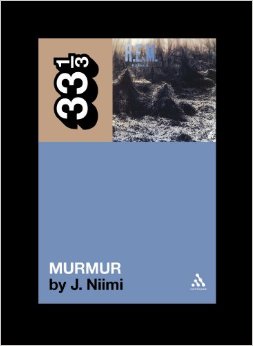
Murmur, by J. Niimi

 Murmur (2005), by J. Niimi

Niimi Murmur

Carefully researched and attentive to small, significant details, J. Niimi’s 33 1/3 book on R.E.M.’s Murmur is one of the best I’ve read so far in this series; and if the four parts of the book aren’t quite integrated, that’s because there are genuine difficulties in trying to account for (i) the history of the band and their cultural context, (ii) the recording of the album, (iii) the album artwork and what it tells us about the record, and (iv) the lyrics.

The jacket of the book tells us that Niimi has worked as a studio engineer, producer, and engineer, and his LinkedIn page adds some detail, saying that he is drummer, songwriter, multi-instrumentalist, engineer, producer, etc., for Ashtray Boy.  I’m sorry to admit I’ve never heard of this band and their nine albums, but it’s clear that Niimi knows whereof he speaks.  The second chapter, the song-by-song analysis, is particularly impressive for its knowledge of recording techniques; in writing it Niimi has had the benefit of interviewing producer Mitch Easter.  So we find out, for example, that the acoustic guitar in ‘Laughing’ was achieved by having Peter Buck, Mitch Easter and Don Dixon all playing a guitar into a single mike, then recording another track with the tape speed tweaked minutely.  Or we learn that Bill Berry produced a particular pssh-pssh sound using some old oak flooring run through an over-modulated compressor. Niimi assumes that his readership is happy with some talk of ‘resolution back to the tonic chord’ and that sort of basic musicological vocabulary.

If there’s a concomitant problem in this chapter its that Niimi hasn’t at this point presented a strong thesis about the album, and so there’s a danger that we can’t see the wood for the trees, the oak flooring, and the Rotosound drum heads.  In this chapter of the book Niimi doesn’t aim to evoke the experience of listening to the album: I listened to it a lot at one time, but haven’t given it a spin for ten years or so; I found as he talked me through the tracks that I could recall some of the details, but less than was the case elsewhere in the book when he did allow himself a more impressionistic and evocative language.

Niimi begins the book with a narrative account of the coming-together of the band, their early gigs, and their recording of the Chronic Town EP: there’s a particular concentration on different recording studios and what they were able to offer, but not at the high magnification of the second chapter.

After the track-by-track analysis, the third chapter pulls back, considering in some detail the album’s cover image of the invasive plant kudzu.  There’s some (to my mind) digressive material (pp.55-61) on the cassette tape as a medium for the distribution of music (a wholly inadequate one when it comes to cover art), but kudzu takes Niimi to some interesting places: it opens up the question of the ‘southernness’ (in the American sense) of the album, and how far we can understand Murmur as ‘Gothic’.  There’s also a really interesting section (pp.74-8) on the phenomenology of reverb and the imaginary sound spaces that studios can produce, and a citation of an intriguing-sounding essay, David Rothenberg’s ‘The Phenomenology of Reverb’.  (Sadly the book has no Works Cited, but it seems as if the essay in question was first published in 2001, and has only ever existed on the internet; the version I’ve found post-dates Niimi’s book.)  Niimi’s technical knowledge comes into play here, but there’s a larger thesis at work, which instantly recalled the non-naturalistic spaces of Murmur and their unsettling effect on the listener.

The final chapter, on lyrics and interpretation, offers what might be the book’s standout contribution (if we were assessing it on scholarly grounds), in that Niimi identifies and summarises an essay that Stipe had read while a student, Walker Percy’s ‘Metaphor as Mistake’, The Sewanee Review, 66, no. 1 (Winter, 1958).  Unfortunately for anyone working in English Lit, the essay as summarised doesn’t say anything very distinctive: in short, there is a shaky if not arbitrary relation between signifier and signified, and this means that the reader will always be required to bring something to interpretation.  While this might have been a brave thing for Percy to write in the context of the New Criticism and the ‘affective fallacy’, by the era of post-structuralism, it was a familiar theme.  (I should, I admit, go and read Percy’s essay for myself.)

The chapter gets much better when it examines the lyrics themselves.  In particular, it makes some illuminating observations about the absence of the first-person singular and, in other ways, the impersonality of Stipe’s lyrics.  There’s an illuminating contrast with Gary Numan’s characteristic pose of impersonality and alienation — a dramatisation of alienation, or a thematisation of it — against Stipe’s more genuinely peculiar approach: ‘On Murmur there are words and there is singing, but there is no singer’ (p.100). This is insightful stuff, and I’m only sorry that by this point, Stipe and the words have become the almost exclusive focus: I’d have like the book more if Niimi had found a structure that enabled him to talk about the music and the singing and the words at the same time.  Perhaps longer track-by-track analyses might have allowed for a more holistic approach, though this difficulty with that form would have been that most of the main issues would have to be dispatched in the analysis of the first track, leaving the later analyses looking thin, or artificially looking for difference where none really exists.

After I Left You, by Alison Mercer

I’ve recently enjoyed reading Alison Mercer’s After I Left You.  I’m not at all knowledgeable about contemporary genres of fiction, but in broad terms After I Left You is romantic fiction, its plot split between the narrator’s years at university (1991-94) and her almost-present day (2011-12) reconnecting with her contemporaries and the playing out of unresolved narratives from twenty years earlier.  I can’t remember where I heard about it, but I was intrigued because I’d enjoyed Elanor Dymott’s Every Contact Leaves a Trace (a sort of deconstructed murder-mystery that’s really about mourning) and when I heard about another fictional account of Oxford in the early 1990s in a different genre, I was intrigued. Dymott and Mercer were both undergraduates in Oxford in the early 1990s; I was an postgraduate at Oxford at the same time.

*NOTE: I’ve tried to avoid spoilers about the really large events, which has led to some avoidance of what really matters about the novel; and to discuss it at all involves at least hinting at some of the story.*

Mercer After cover

There’s an ease and classical simplicity about Mercer’s narration; she’s completely in control of her materials, knows exactly where she wants the novel to go, and there’s nothing superfluous.  (Unless you apply your criteria for superfluity with on some painfully austere basis.) At one point early on I was worried that the novel was going to be too simplified, too diagrammatic: the narrator, Anna Jones, runs into her old friend Meg Brierley, who had also been an undergraduate at (the fictional) St Bart’s College. Meg has recently separated from her partner; Anna suggests that she might start her own business:

‘Maybe I could, but to be honest, I’ve lost my confidence. I find it hard to believe that anyone would take me seriously.  I mean, who am I? I’m Jason Mortwell’s ex and the mother of his three children. Who’d invest in that?  At the end of the day, I’m just another middle-aged woman who’s been put back on the shelf?’

Anna’s self-consciousness about her status, and the last sentence in particular, have the effect of placing her at little too deliberately in what I assume are the typologies of present-day romantic fiction, as well as getting Meg to do exposition which could be left out altogether or left to the narrator.  However, the ability to draw on such typologies and recognisable narratives is probably inseparable from Mercer’s strengths (that classicism and sure-footedness); and the over-explicit placing of the character at this point is a minor blemish.

What Mercer’s particularly good at is evoking the uncertainty of self that’s part of arriving at and existing through university: the awareness of performativity in oneself and others, and the ease with which one is bedazzled by other people’s performances. Several of her characters are, as it happens, aspiring actors, but that’s not what I mean.  After they’ve been to see a production by one of their circle, Mercer nails it: ‘none of my friends were quite their usual selves that night.  Or rather, we were all trying to be ourselves, and were overshooting the mark.’

Mercer’s way with similes also gives the novel an additional dimension.  After Anna has questioned her friend Keith a little too intimately — Keith is one of the best secondary characters, an intriguing composite of types (the under-confident slacker, the outsider, the male confidant) who nevertheless becomes something more than the sum of those parts — she describes the instant change in their relations: ‘I followed him indoors and found him slumped on the sofa, staring not space, and I knew then that I’d broken something, some part of the mechanism of our friendship, and I had never before appreciated how delicate it was, or how precious.’  While the past tense here indicates a gap of a few moments, part of the emotional strength of the novel lies in its awareness of the ways that friendships at university are conducted by people who haven’t achieved complete emotional maturity, and who only achieve it through their mistakes, and who reach a fuller understanding of their situation only in retrospect. Without Mercer having to spell it out, we know that that moment of realisation reverberated for many years later.

The loss of Keith is handled lyrically and movingly.  In the 2012 scenes, as Anna attends the wedding of one of her university friends, she remembers him, thinks back to the circumstances of his death, and imagines how he might look had he been able to attend the wedding.

     That was when I heard him, as subtle and undeniable as a tap on the shoulder, or an echo, or a memory: I want you to be happy.

     The next minute he was gone, as if he’d been drawn back into the splendid quiet of the yew trees, or faded like the imprint of warm breath on a mirror.

Moments like that lift the novel above its plot.  The main drivers of the plot are several. From the very outset, the question of Anna’s parentage: her mother has separated from her biological father early on, and she wants to know who he was.  (The answer stares us in the face and we don’t see it.)  Cumulatively, and much less specifically, the question of what rupture occurred between Anna and her student-days boyfriend Victor, and what its ramifications were.  And (less subtly) about two thirds through, when someone recognises that Anna is repressing something she admits that ‘Something did happen […] a long time ago.  Three things.  Two of the people I loved the most betrayed me. I witnessed a crime. And someone died.’  There’s a sort of resolution of one plot aspect in the final wedding scene which satisfies a basic emotional need for justice, and which would work in a film or TV production, but which felt a little melodramatic and in excess of the quieter and subtler emotional qualities of the novel. Setting aside the plot, at some deeper level what drives the novel is a sense of loss and an awareness that our attempts to repair past damage never completely work.

Does the Oxford University setting matter?  I find this hard to judge, having been at Oxford myself as a student (albeit at a very different college), and the only other university I know in detail I know as a lectuer.  The novel certainly doesn’t labour its setting: such topographical scene-painting as Mercer provides is only what’s needed for the plot or the emotional state of Anna. St Bart’s is recognisably University College, and the north Oxford annexe recognisably that college’s Staverton Road buildings.  A peculiar thing happens when the students visit a small rural church with a well and an adjoining yard full of goats, which is based on St Margaret’s Church at Binsey, but which in the novel is relocated somewhere off a dual carriageway, presumably the A34.  I don’t say this as a criticism, but (a) because it’s like one of the those dreamlike moments in Inspector Morse where characters leave the front quad of one college and emerge into a completely different part of town, and (b) because it shows that Mercer isn’t rigidly tied to actual topography.

More importantly, could these characters work in a different university setting?  The glamourous Clarissa and her actress mother seem plausible in a received version of Oxford when they might not in a novel set elsewhere.  Initially Clarissa’s intimidating self-confidence is a mark of Anna’s feeling of not quite belonging.    If the same story were to be set in a different university, I wonder whether Clarissa wouldn’t seem more out of place.  (None of this is to do with the real Oxford: I don’t think I met any children of celebrities at Oxford, or if I did they kept quiet about it.) The things that struck me as distinctive about it — the intense pace of the eight-week terms, the potentially claustrophobic quality of college life — aren’t significant in the novel.  And the fact that Anna’s friends have drifted apart after graduating and that Anna herself has shown little interest in college reunions deflates the myth of mason-like networks being what Oxford graduates gain from their time at university. For the most part it’s a story that could be transposed elsewhere without loss, and that is very level-headed about its setting. It doesn’t trade on any Bridesheady glamour or mystique about Oxford.

(Having written this, I see that Mercer has written wittily on her blog about her Oxford setting and the pitfalls of writing an “Oxford novel”, and that she’s read far more examples of the beast than I have.)

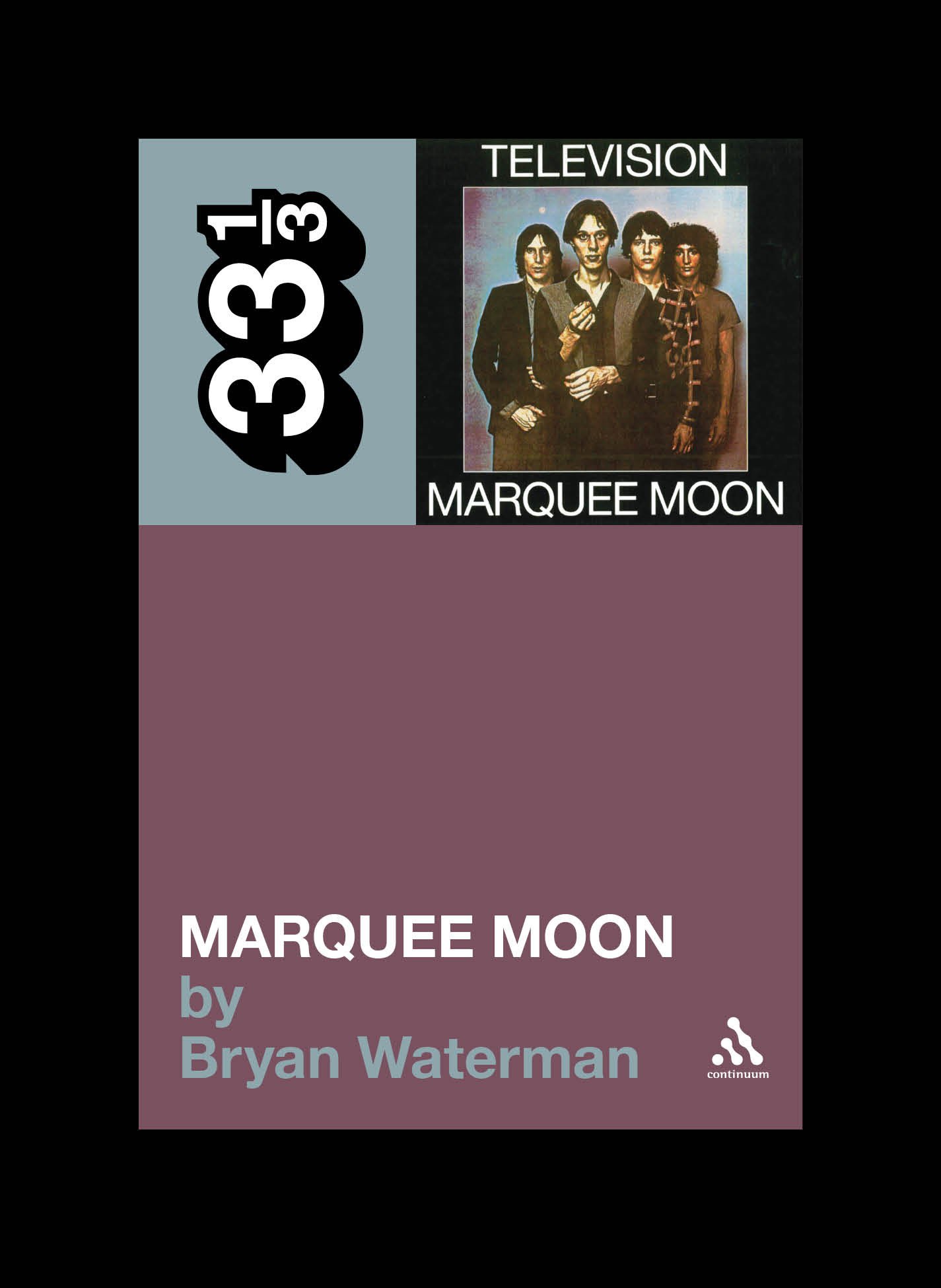
Marquee Moon, by Bryan Waterman

Waterman MarqueeMoon

I’ve enjoyed reading Bryan Waterman’s Marquee Moon (2011), his account of Television’s 1977 debut album, but it doesn’t have the qualities of the best in the 33 1/3 series.  Waterman’s prose is sharp and to the point, and his scepticism about the band’s creation myth absolutely necessary in relation to an era and a musical movement where the modernist tropes of a break with the past were being recycled. What I’m not so sure about it is the amount of detail he goes into in relation to the early 70s New York music scene, and the networks that Tom Verlaine and Richard Hell worked their way into.  His knowledge of the different sub-scenes is admirable, as is his tracking of venues, musical styles and fashion statements, and he presents this information with admirable clarity, never allowing the detail to obscure the basic narrative of the band’s emergence.  But for all those virtues, I felt frustrated, waiting for a discussion of the music itself to come along.  It takes until p.156 (in a book with pp.211 of text) for the band to enter the studio to record Marquee Moon, and the track-by-track analysis doesn’t begin until p.163.  What we get is insightful, but only rarely do Waterman’s insights into the music and lyrics themselves seem to justify the detailed contextualisation that has come in the first five chapters.  What I wanted more of were moments like the one where Waterman finds a trace of New-York-Dolls-style campiness in the chorus to ‘See No Evil’, or when in relation to ‘Venus’ he notes the New York trend of name-dropping one’s contemporaries.  Although Waterman is alive to the ways the music and lyrics might reference other musicians and other genres, the range of  reference he finds in Marquee Moon suggests that the New-York-focused contexualization might have been too narrow: it’s not all the Dolls and the Velvets and Patti Smith; instead there are references to the Robert Johnson, The Yardbirds, and Richard Thompson.

Perhaps I’m being too harsh.  I’ve greatly enjoyed finding out about CBGBs and the New York scene in the early and the mid 1970s; if Waterman were to write another 33 1/3 book I would — depending on the subject — be interested to read it; but the book is a reminder of the gulf that separates contextual knowledge and formal analysis, and the difficulty of making the two connect.

#bookadayUK (30): Would save if my house burned down

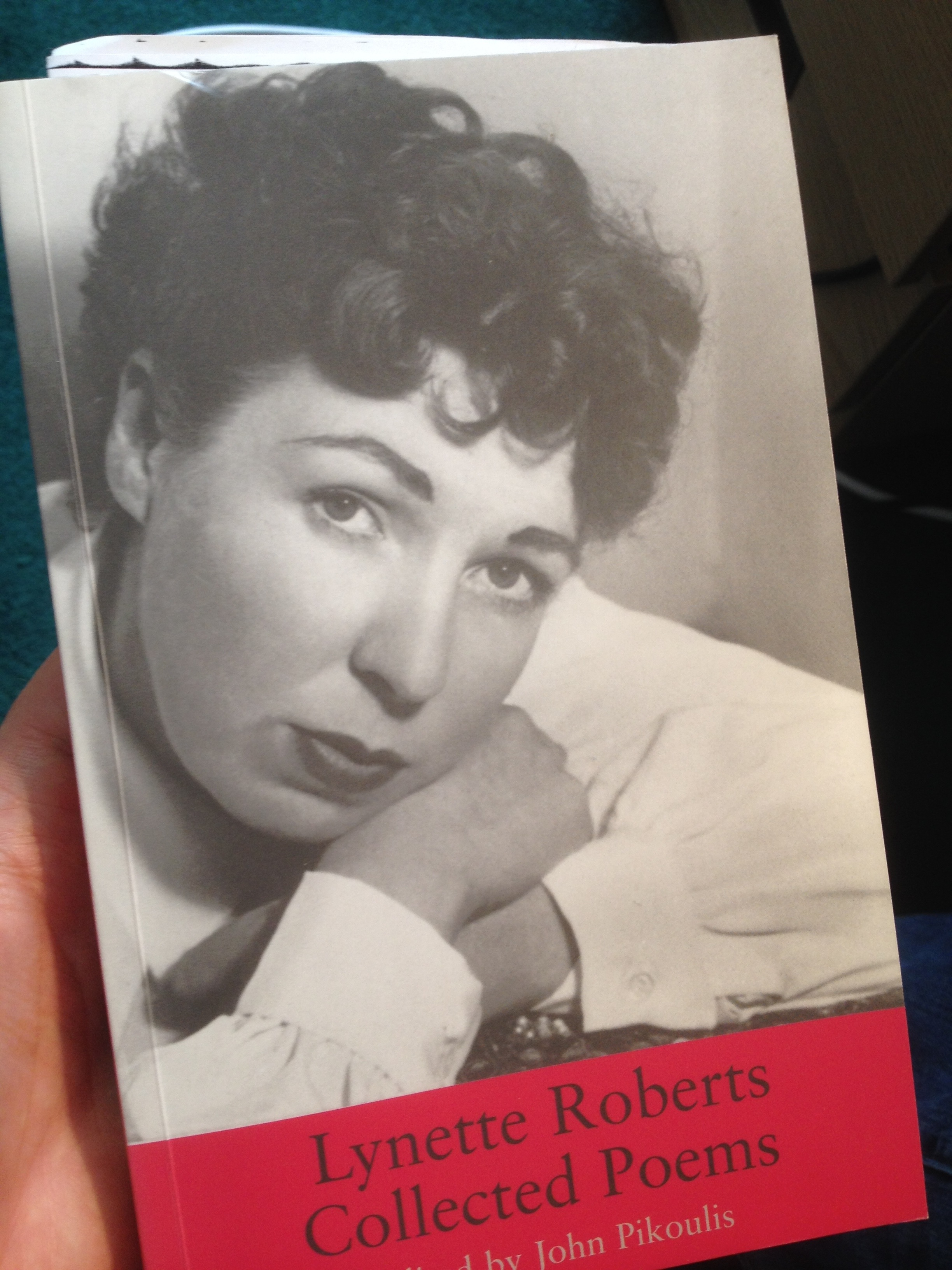
The books I’d most want to save are actually in my office at Merton.  The only thing I own that is remotely close to being a unique copy is my copy of Lynette Roberts’s Collected Poems, ed. John Pikoulis (Bridgend: Seren, 1998), a book that the publisher withdrew and pulped before publication, but not before six or so copies had been accidentally released to the Oxford Blackwells.

Roberts Lynette CollPoems

But even that edition circulated in photocopied form, and since Patrick McGuinness’s edition came out (Manchester: Carcanet, 2005), its loss has been less keenly felt.

The other category of book I’d want to save is those with annotations.  A heavily annotated text can represent years of work, and though half the value lies in having the insight that led to the annotation, and the act of annotation is really just a means of physically sealing that insight, I’d still be sorry to lose certain books.  The trouble would be, which ones should I select?

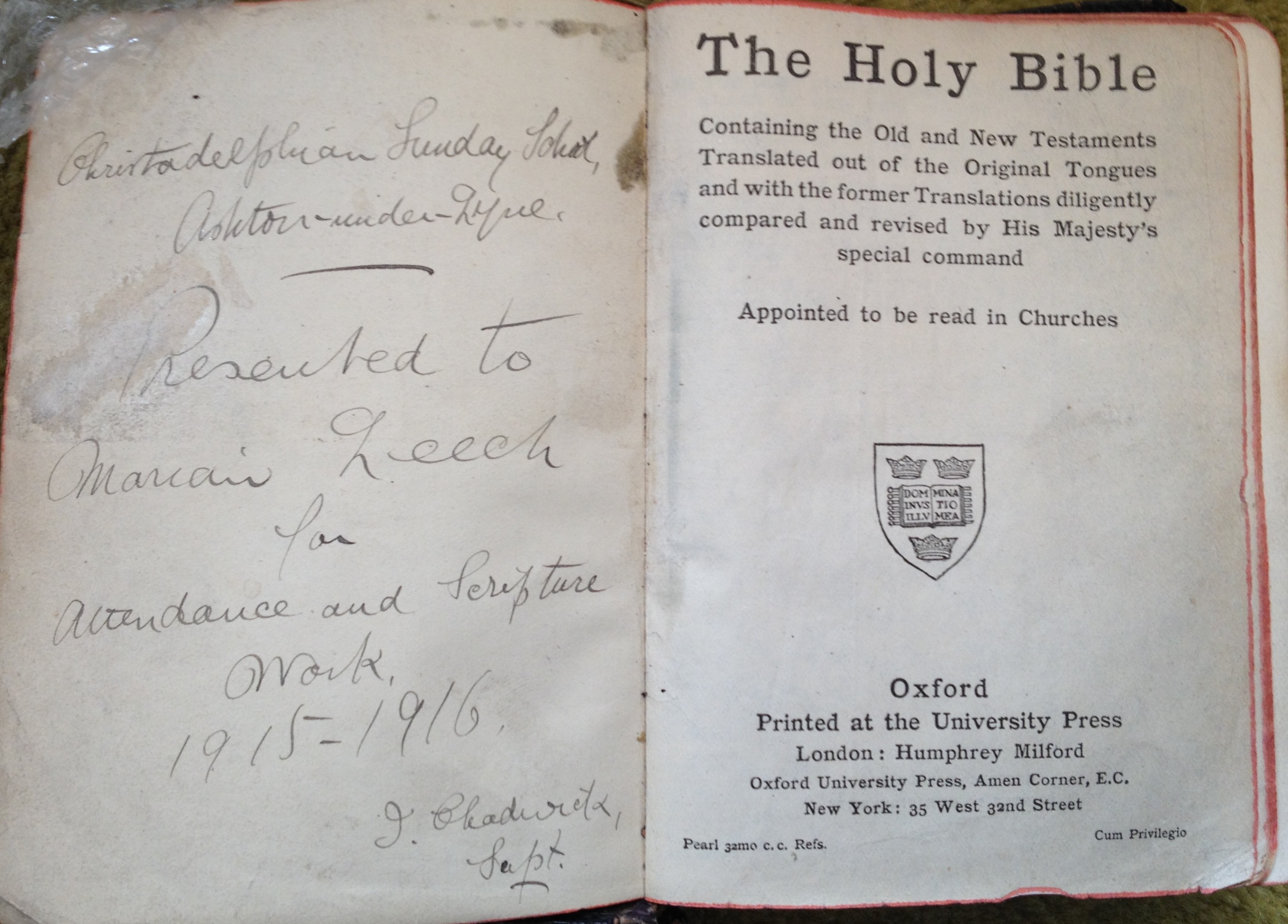
Finally, there are books with personal connections.  Here, I’d probably be inclined to save my grandmother’s Bible, presented to her at the Christadelphian Sunday School in Ashton-under-Lyne for attendance and scripture work, 1915-16. I’m not sure of her date of birth, but I think she must have been about 8 years old; she died long before I was born.  The millenarianism didn’t get passed down through the family, but the book did.

Bible_MarianLeach

#bookadayUK (29): Most re-read

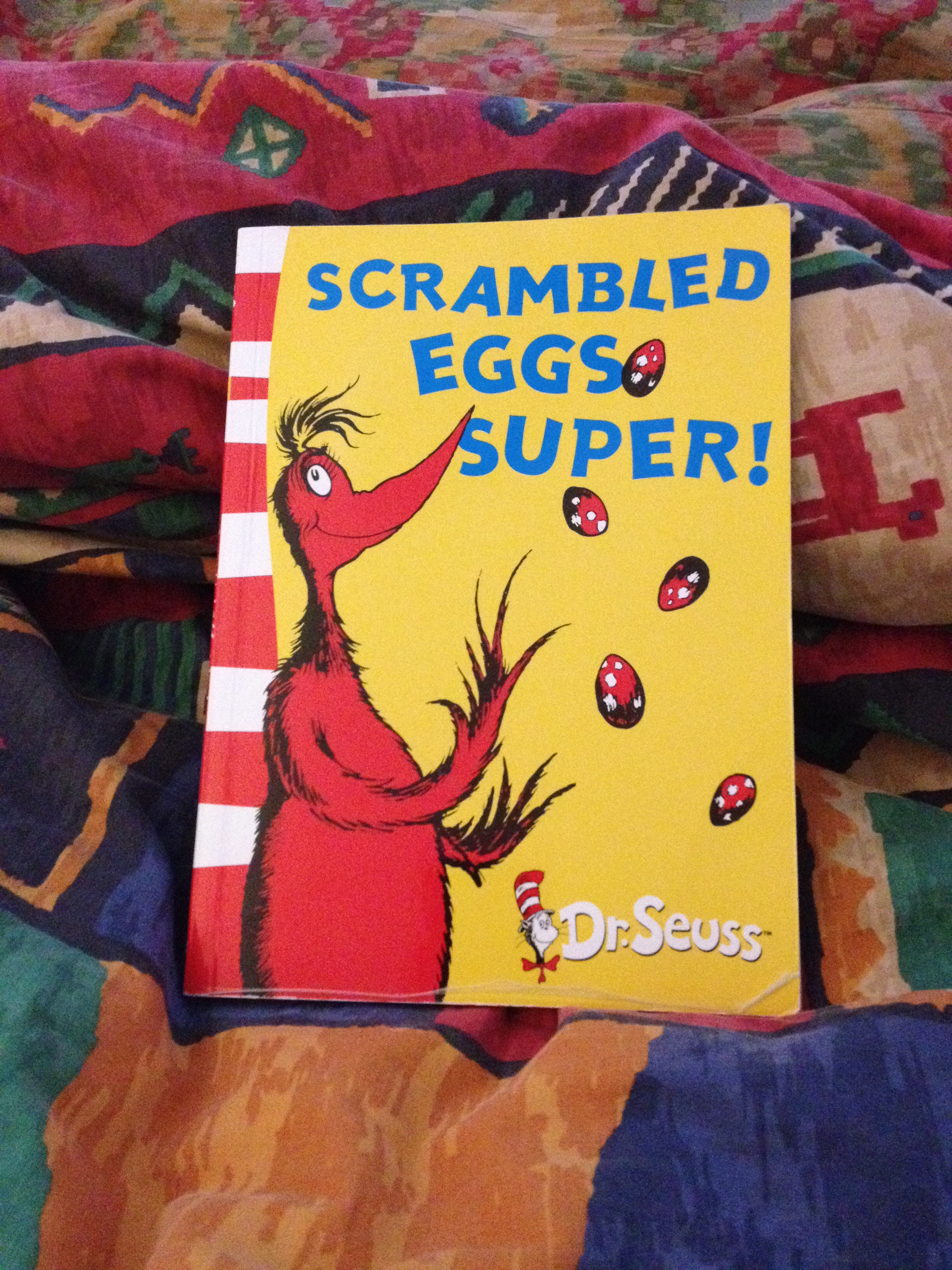
Mrs Dalloway or Scrambled Eggs Super!?  I was on the verge of choosing the former, when I saw someone else tweet Judith Kerr’s The Tiger Who Came to Tea, and realised that across six months or so last year and earlier this year, I read Dr Seuss’s egg-collecting romance epic pretty much every night to our three/four-year-old.  And although my re-readings of Mrs Dalloway may stretch into the dozens, I’ve no reason to think that they run over a hundred.

DrSeuss

But there’s a respect in which I have genuinely re-read Mrs Dalloway more often than Scrambled Eggs Super. When I’m reading the latter, I’m scarcely little more than a vocalisation machine for Dr Seuss’s words. I tried, for the sake of my own sanity, to find minor variations in rhythm and intonation each time I read it: sometimes running one line into another, sometimes emphasising line-endings and rhymes; sometimes accelerating and decelerating.  But for all that I tried, it’s not particularly flexible verse for a reader; it’s got its own insistent rhythms and it doesn’t want to allow you much leeway.  And as for interpretation at a semantic level, if there is scope for that, I’ve not risen to the challenge.

Whereas with Mrs Dalloway, each re-reading has brought new emphases, has found new images emerging, or new interconnections, or new questions as to why Woolf does what she does.  Although I have re-read it cover-to-cover many times, I’ve also re-read selected scenes and episodes far more often, sometimes with a view to an impending class or tutorial, sometimes with a view to writing a lecture or seminar paper. I first read it in an unannotated Grafton paperback in 1987, as one of several novels by Woolf for one of my first-year tutorials;  that was the copy I was still using when I decided that Woolf would form part of my doctorate, probably sometime in 1991 or 1992.  When I started teaching Woolf for a module at Bangor (1996 or 1997) I insisted that everyone use the Oxford World’s Classics editions, but soon after had to obtain the Penguin Classics ones for writing a chapter in the Cambridge Companion.  Then in 2000 David Bradshaw did an excellent new edition for Oxford World’s Classics and I had to learn to find my way around yet another pagination. As I’ve become more familiar with it, re-reading a small part reactivates memories of the whole; also, as I’ve become familiar with the various copies I’ve owned, I’ve learned to find passages quickly, in spite of the lack of chapter divisions.

Mrs Dalloway teaches its reader about the power of repetition and echo from the very start: everyone notices Big Ben and the leaden circles dissolving in air, and many readers must be grateful to have Big Ben’s chimes as a substitute for chapter divisions, as a fixed reference point in the text in the absence of chapter divisions, even while the text reminds us that there’s a kind of violence in such divisions and subdivisions, through the clocks of Harley Street slicing and shredding the day.  Once you’ve followed that cue, there are plenty of others: those shaped around the parallelism between Septimus and Clarissa, especially, but also others that are more elusively riddling such as Peter Walsh’s image of himself as a buccaneer being echoed in Elizabeth Dalloway’s idea of the omnibus being a pirate ship.  Mrs Dalloway has rhythms: not — or not only — prose rhythms, but structural rhythms.  Unlike Dr Seuss’s verse rhythms, they’re subtle and they allow the reader great flexibility about where to place the emphasis.  As Woolf said in her often-quoted essay ‘Modern Fiction’, ‘the accent falls differently from of old.’